At VCU School of Medicine, we’re invested not just in providing your medical education, but in supporting you as you choose and pursue your career. From new student orientation to graduation day, we are here to answer every question and celebrate every milestone on your journey to becoming a physician.
"When I started my fourth year, I was undetermined in what I would do for residency. After talking to the mentors in the Office of Medical Education, I had a solid plan for obtaining experiences that would inform my decisions. It eased my anxiety about not knowing and provided me with a step-by-step process of making my decision."
M.D. Graduate, Class of 2022

Careers in Medicine: We'll help you find your fit
Choosing a specialty is a momentous decision. According to surveys of VCU M4s, approximately 65% of our students change their minds at least once during medical school about which field they want to pursue.
Built on the foundation of AAMC materials, our four-year integrated program, Careers in Medicine, provides support and guidance during each stage of your medical education. Through personality assessments, career-specific advising sessions, specialty workshops and residency match counseling, we’ll help you select and pursue the medical specialty that best suits you.
Special Events
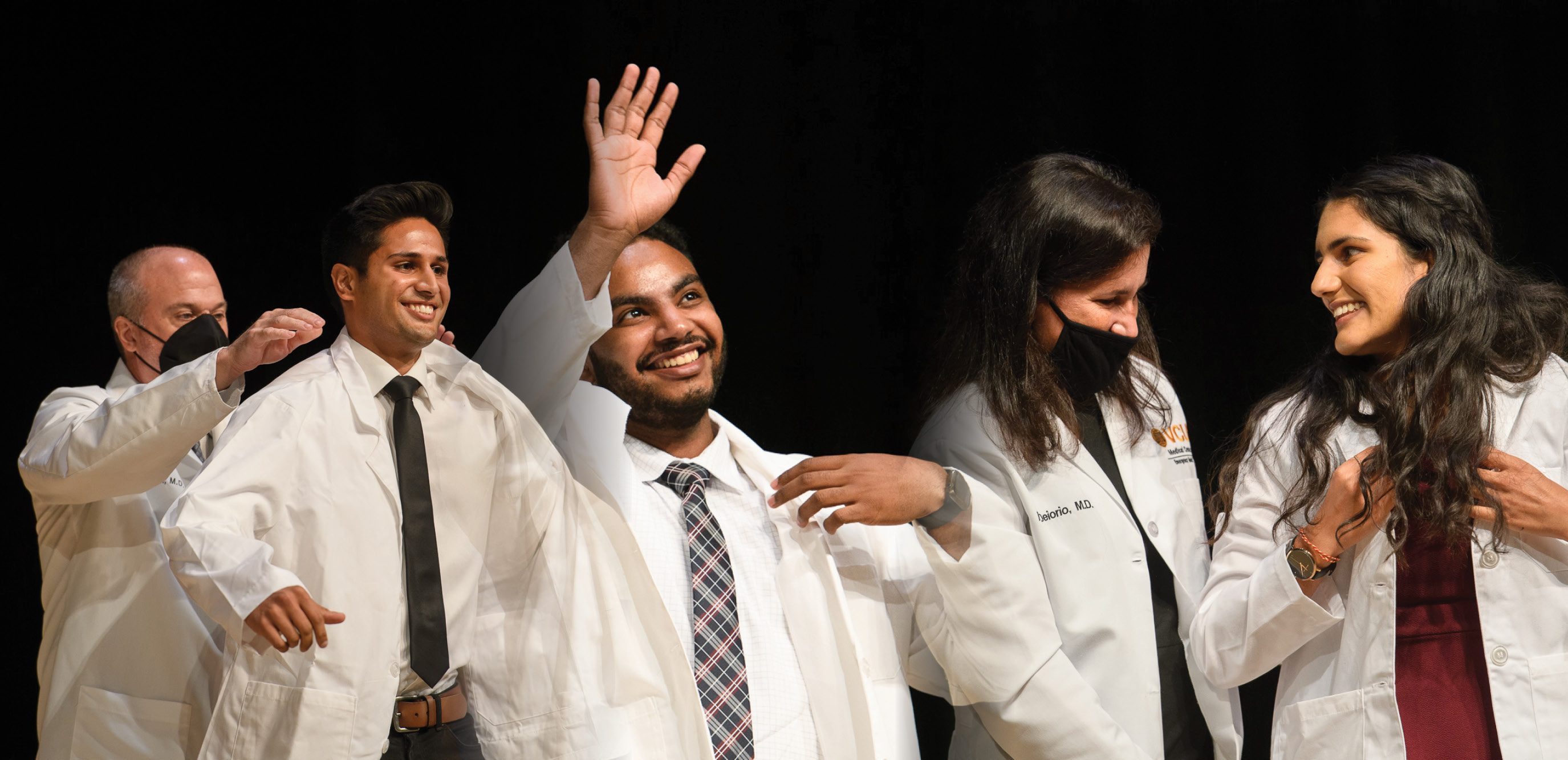
From the white coat ceremony to graduation day, each milestone along the journey to becoming a doctor is worth celebrating. Our faculty and staff collaborate with leaders from each class to make these special events memorable for students and their loved ones.

Student Groups
At VCU School of Medicine, there’s a group for every interest. Dozens of groups are available for medical students to meet, collaborate with and learn from their peers across a broad range of topics. Subject areas include medical specialties and subspecialties, volunteer opportunities, identity groups such as the Association of Women Surgeons, and shared hobbies like rock climbing and yoga.
Community Service
We encourage medical students to give back to the community, with first-years completing at least 20 service hours in conjunction with the Patient, Physician and Society course. Students may volunteer with any organizations they wish, such as the American Red Cross, Jacob’s Chance, the Trauma Survival Network and Refugee Connect. Some organizations, like the Mattaponi Healing Eagle Clinic, are in collaboration with student interest groups.
Student Support and Well-Being
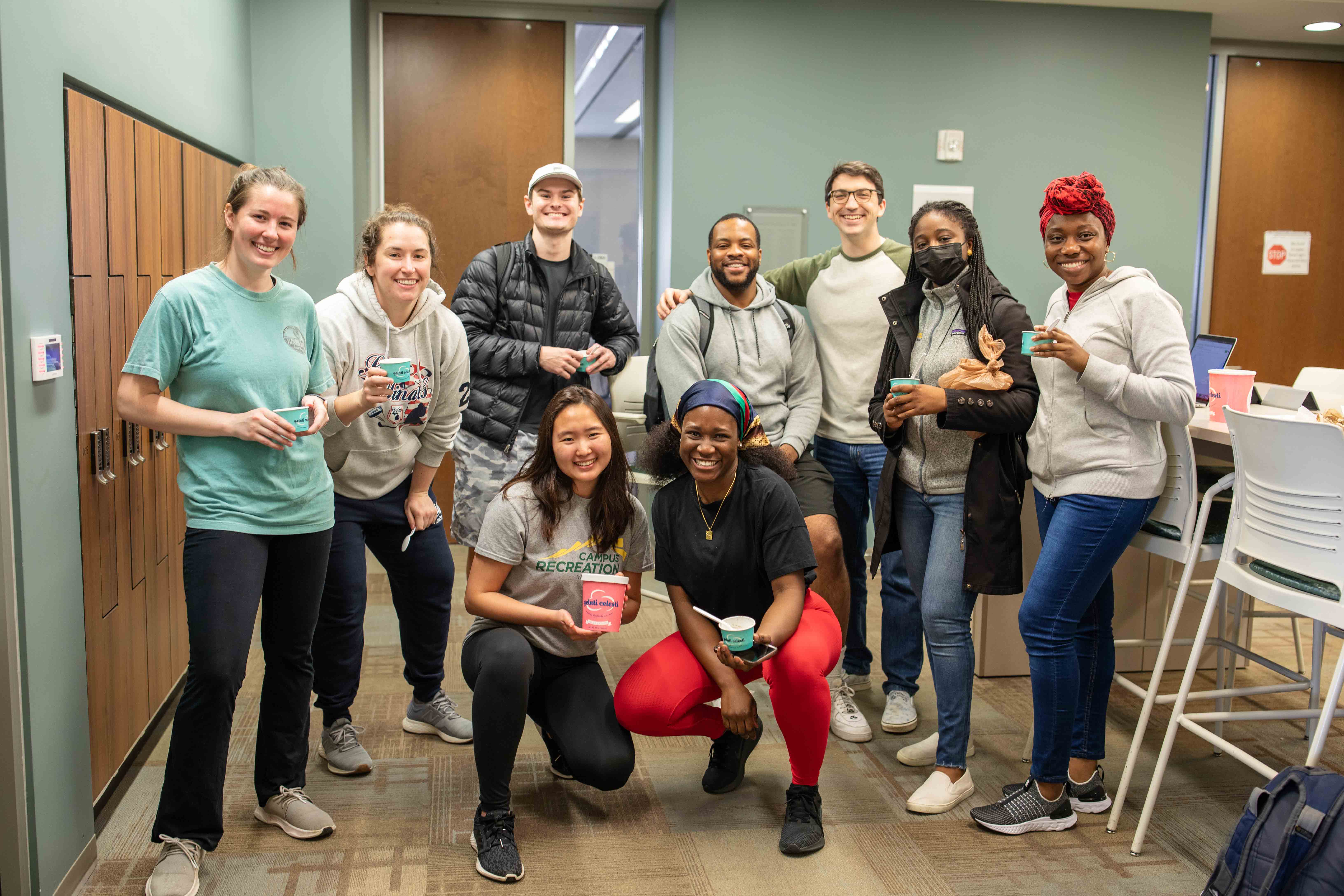
Medical school is hard. We aim to help keep our students grounded with Project HEART, an initiative that reminds us all to heal with empathy, acceptance, respect and integrity.
Each incoming medical student is assigned to a small group led by a faculty or staff member to provide guidance, assistance and support. The groups meet at least eight times during M1, and periodically through the rest of your time medical school career. Project HEART leaders serve as students’ advisors during M1 and M2.
In each class, two students are selected to serve as confidential peer advocates to provide support for their classmates.
Preparing and applying for residency can be stressful. Through workshops, panels and other information sessions, you’ll learn everything you need to know about the Electronic Residency Application Service (ERAS), the National Residency Matching Program (NRMP) and the programs outside the Match.
- Taking Flight: Preparing for Residency Application
- ERAS calendar
- NRMP calendar
For information about contacting specialty advisors, please email vcuome@vcuhealth.org
Students work one-on-one with a coach to navigate their professional and academic development. Through inquiry and goal setting at semi-annual meetings, students and coaches co-create a path toward independent practice of the important skills of being a physician.
University and MCV Campus Support
University Counseling Services
With offices on both the Monroe Park Campus and the MCV Campus, University Counseling Services provides support for all students through individual, relationship and group therapy, skills groups, support groups and crisis services.
University Student Health Services
VCU’s nationally accredited University Student Health Services is committed to providing high-quality outpatient care to all VCU students. Primary health care services include allergy shots, immunizations, nutrition consultations and sexual health and wellness.
Division for Student Engagement and Impact
VCU's Division for Student Engagement and Impact aims to prepare students for admission and enhance their experience in a health sciences or health professions program at VCU. The division provides a variety of resources and opportunities for students, including social and academic support, leadership experiences and connections with community partners.
Dean of Students Office
The Dean of Students Office aims to help all VCU students, on both campuses, have a successful and fulfilling student experience. Resources include:
- Ram Pantry, which ensures food security, human dignity and well-being on campus by providing food for VCU students in need
- Rams in Recovery, which provides mutual aid recovery meetings, a scholarship program and a recovery clubhouse
- Serving the entire VCU community, the Office of Multicultural Affairs promotes inclusion, advocates for social justice and specializes in supporting historically underrepresented groups
Office of Multicultural Affairs
Serving the entire VCU community, the Office of Multicultural Affairs strives to provide a safe, trusting, and supportive environment for students to explore, design, learn, serve, recognize, and celebrate their multifaceted identities and the global community we share.
VCU Recreation and Well-Being (RecWell)
Bridging Recreational Sports and the Health Promotion and Well-Being Center, RecWell offers resources and programming for students to maintain healthy, active, mindful lifestyles while at VCU.

Students can expand their educational experience and connect with peers by joining one of our many student organzations.

Mistreatment and Professionalism
We are committed to fostering an educational environment in which all learners and educators feel valued and respected. When mistreatment arises, we provide supportive, confidential support in reporting and addressing issues.

The VCU School of Medicine Office of Financial Aid provides the advice, resources and tools you need to reach your financial goals in medical school and beyond.
Life In Richmond
We encourage our students to maintain a healthy work-life balance, and Richmond is a wonderful place to engage in that well-rounded lifestyle. As a mid-sized city with a metropolitan population of 1.3 million, Richmond provides stimulating activities while maintaining its intimate feel and unique vibe. Vibrant neighborhoods offer distinct, diverse experiences, with no shortage of art galleries, museums, music venues, restaurants, breweries and parks.
Learn more about our community